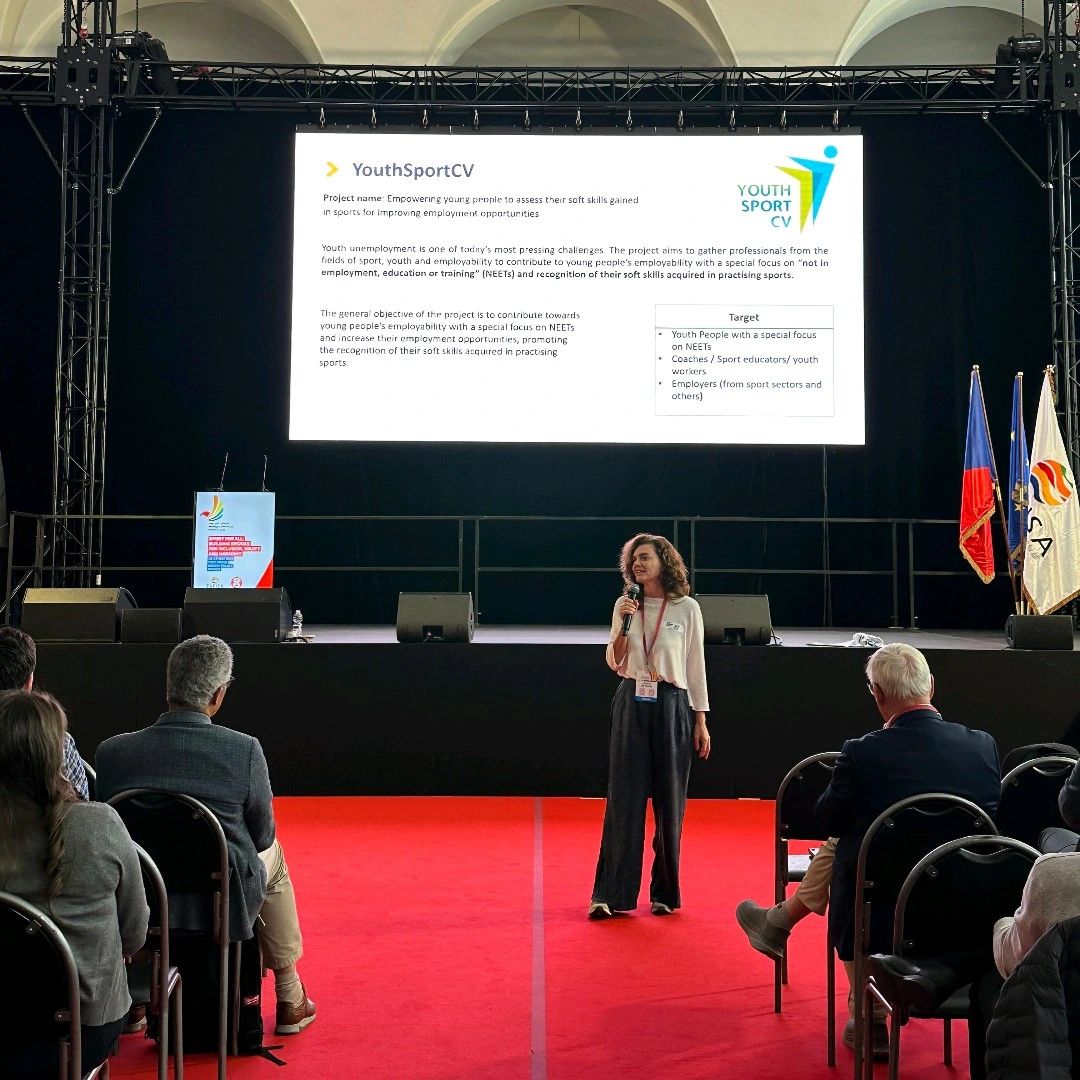
On 13 May 2026, on the opening day of the 29th TAFISA World Congress in Prague, Czech Republic, TAFISA brought together its European members and Congress participants for a European Regional Meeting, a dedicated space for the European Sport for All community to connect, share updates, and explore collaborative initiatives.
The meeting took place against the backdrop of a Congress that drew participants from across the globe under the theme Sport for All: Building Bridges for Inclusion, Equity, and Harmony, a theme that resonated strongly with the work presented during the regional gathering.
As part of the meeting was the formal presentation of the YouthSportCV project, Empowering Young People to Assess Their Soft Skills Gained in Sports for Improving Employment Opportunities. The project addresses a pressing reality: while sport builds valuable skills, communication, teamwork, resilience, and leadership, these are rarely recognised or articulated in ways that translate into employment opportunities, particularly for young people who are most vulnerable in the labour market.
YouthSportCV aims to change that. The project's overarching goal is to strengthen young people's employability by helping them identify, assess, and communicate the soft skills they develop through sport. A particular focus is placed on NEETs, young people Not in Employment, Education, or Training, a group that stands to benefit most from accessible, sport-based pathways into the workforce.
The presentation resonated well within the Congress setting, where discussions throughout the week touched on youth leadership, intergenerational connection, and the role of Sport for All in empowering communities. Sessions exploring topics such as the next generation of leaders in sport organisations and sport as a tool for social inclusion provided a broader context that underscored the relevance and timeliness of the YouthSportCV initiative.
Participants had the opportunity to ask questions, better understand the project's approach, and discuss. The conversation reflected a shared recognition that sport's value extends well beyond participation, and that helping young people make that connection explicit could open meaningful doors.